
Struggling with Physio or Chiro? Why You Should Try Sports Therapy Instead
Struggling with Physio or Chiro? Why You Should Try Sports Therapy in Wellington If you are dealing with chronic pain,
Beyond Basic Stretches: Advanced Plantar Fasciitis Treatment in Wellington
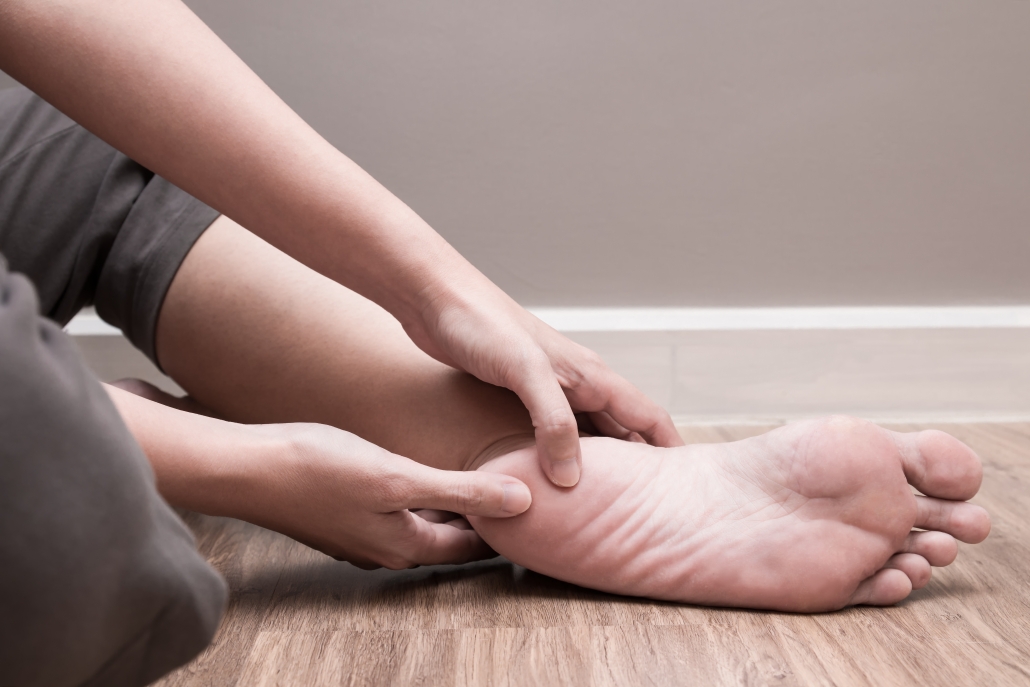
If your first few steps out of bed in the morning feel like you are walking on crushed glass, you already know the daily misery of plantar fasciitis. It is one of the most common complaints we see at Severn Pain & Injury Clinic. Whether you are a dedicated runner tackling the Wellington waterfront, a daily commuter navigating the steep hills of the CBD, or a worker who spends long shifts on your feet, chronic heel pain can bring your active lifestyle to a complete standstill.
For many Wellingtonians, the standard medical advice seems simple enough. You are usually told to roll your foot over a frozen water bottle, buy a generic plastic calf stretcher, and diligently perform heel drops on your staircase every single night. But what happens when you have been stretching for months, you have completely changed your footwear, and that sharp stabbing pain simply refuses to budge?
If standard physio exercises are no longer working for you, please know that you are not necessarily doing them wrong. The reality is that the tissue in your foot has likely changed on a deep level, and your treatment approach needs to change right alongside it.
To understand why basic stretching stops working, we need to look under the surface of the foot. The plantar fascia is a thick fibrous band of connective tissue running from your heel bone all the way to your toes. Its primary job is to act as a vital shock absorber for the arch of your foot every time you take a step.
When this tissue is initially overloaded, it becomes swollen and inflamed. This early stage is what we call acute plantar fasciitis. However, when the daily strain continues over weeks or months, that initial inflammatory phase passes. Your body struggles to repair the area properly. Instead of bouncing back, the healthy and elastic tissues are gradually replaced by disorganised, thickened, and stiff scar tissue.
In the medical world, this long-term state of wear and tear is known as plantar fasciosis. At this chronic stage of tissue breakdown, standard stretches and generic physio exercises fall painfully short.
When you are dealing with chronic, long-lasting tissue damage, generic stretching routines simply do not have the power to heal the plantar fascia. There are three main reasons why your at-home exercises might be failing to deliver the relief you need.
Firstly, stretching cannot break down stubborn scar tissue. A tight calf stretch certainly feels good and relieves tension on the back of the leg, but it cannot dissolve the deep knots, scar tissue, or bone spurs that have formed around your heel bone over the months.
Secondly, standard exercises cannot force fresh blood flow into a damaged area. Tissues that have been damaged for a long time often have a very poor blood supply. Standard daily movements do not create the targeted stimulation needed to trick your body into growing brand-new blood vessels.
Finally, chronic heel pain is caused by cellular fatigue. The cells responsible for building fresh, healthy tissue have essentially given up and gone to sleep. A simple calf stretch on your staircase does not provide a strong enough wake-up call to get those healing cells working again.
When exercise alone stalls, we need to introduce advanced physical therapies to create a targeted healing response.
At Severn Pain & Injury Clinic, we do not just want to manage your daily symptoms. We want to actively repair the damaged tissue. By combining three highly advanced treatments, we can address chronic heel pain at its root cause. This comprehensive approach is what separates temporary relief from true, long-term recovery.
Shockwave therapy is one of the most powerful and effective tools available for stubborn heel pain. It involves passing high-energy sound waves directly into the damaged tissue. We use two distinct types of shockwave therapy to ensure we treat the entire problem area.
Radial Shockwave Therapy disperses energy over a wide area, much like ripples in a pond. We use it to treat the wider sole of your foot and to release deep tension in your calf muscles. This broad application addresses all the tight muscles in your leg that are pulling upwards and causing tension in your heel.
Focus Shockwave Therapy works differently. It allows us to concentrate energy deep into a precise, pinpoint location. It is incredibly effective for targeting the exact spot where the pain originates on the heel bone. Focused waves can help break down painful heel spurs and dense scar tissue without causing any irritation to your skin.
Shockwave therapy works by forcing your foot to restart the healing process. It breaks down chronic scar tissue, stimulates the growth of new blood vessels, and speeds up your body’s natural healing timeline.
Where shockwave therapy provides a powerful mechanical reset, High Power Laser therapy provides an essential energy boost to your cells. HPL therapy uses specific wavelengths of light to penetrate deep into the foot.
When this concentrated, warming laser light reaches the damaged tissue, it interacts directly with the energy centres inside your cells. This interaction rapidly increases the production of cellular energy, giving your cells exactly what they need to repair damaged fibres. HPL therapy also provides amazing immediate pain relief by calming down sensitive nerves and flushing out any leftover swelling.
Finally, we must address the tight muscles that are constantly pulling on your heel. The calf muscles are notorious for developing deep, painful knots that constantly pull upwards on the heel bone. This constant upward pulling adds immense strain to the bottom of your foot.
Dry needling involves inserting a sterile, ultra-fine needle directly into these muscular knots. This triggers a tiny local muscle twitch, which effectively hits the reset button on the muscle. The calf muscle rapidly relaxes, returning to its normal length and instantly taking the pressure off your painful heel.
You do not have to accept a painful morning hobble as a permanent part of your life. If you have been battling stubborn heel pain and standard physio exercises are failing to deliver results, it is time for a modern approach.
At Severn Pain & Injury Clinic in Wellington, our combination of Radial and Focus Shockwave Therapy, High Power Laser Therapy, and Dry Needling is designed to fix the root cause of chronic heel pain. Book an assessment with our expert team today, and let us help you get back to exploring Wellington completely pain-free.
Struggling with Physio or Chiro? Why You Should Try Sports Therapy in Wellington If you are dealing with chronic pain,
Conquering Outer Knee Pain: Advanced ITB Syndrome Treatment in Wellington Wellington is a city of runners. From the flat, breezy
Hitting the Hills: The Most Common Running Injuries We See in Wellington Wellington is an incredible city for runners. On