
 04 385 6446

About shockwave therapy
Research has shown shockwave can bring effective relief for a wide variety of painful conditions. Even those that are often resistant to other treatments.

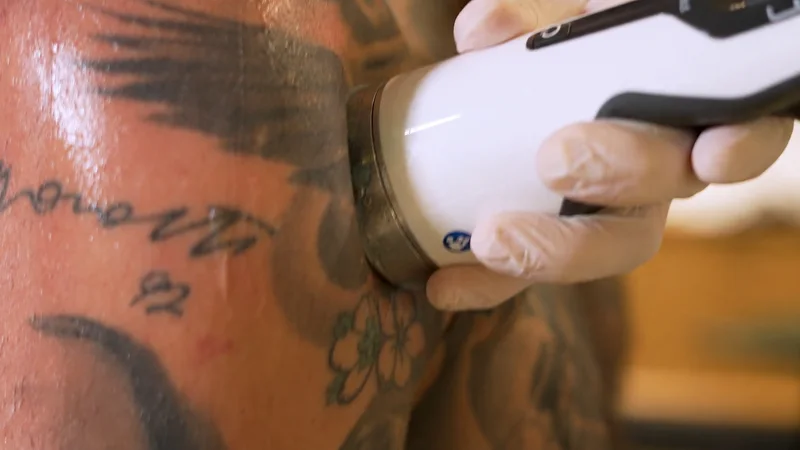
Shockwave therapy uses a handheld device to deliver high-energy sound waves into the body’s soft tissues. At Severn Clinics, we use both focused and radial shockwave therapy.
GET IN TOUCH 4.9 · 400+ Google reviews
Shockwave therapy is one of the treatment options discussed after assessment. Evidence and expected outcomes depend on the condition and treatment protocol.
ShockwaveTherapy was originally researched and developed for the treatment of kidney stones. Decades of further research has established it is an excellent treatment for a wide range of painful musculoskeletal conditions.
At Severn Clinics we are the only clinic on the Lower North Island using both Focused and Radial Shockwave for the treatment of chronic pain.
Scientific studies have shown shockwave is an effective treatment for a wide range of pain conditions.
Research has shown shockwave can bring effective relief for a wide variety of painful conditions. Even those that are often resistant to other treatments.
Shockwave therapy uses a handpiece applied to the skin. Suitability, potential risks and alternatives need to be discussed before treatment.
Treatment recommendations depend on your symptoms, assessment and the evidence relevant to your condition. We review your response before discussing further sessions.
Shockwave therapy uses a handheld device to fire high energy sound waves through the body’s bone and soft tissues – just like medical lasers do – but with sound. The sound waves can be focused on a single point up to a depth of up to 12 cm.
These sound waves were originally tested as a treatment for kidney stones. Interestingly, people in these initial trials also found that old pain complaints spontaneously resolved. Famously, one lady suffering from severe tissue death (osteonecrosis) in her hip bone caused by poor blood supply showed regenerated bone tissue.
Contact us now to book a consultation!
Make An AppointmentWe’ll take a look at what’s going on with your pain and diagnose what we think is likely causing it.
We’ll determine how frequently treatment is required. For most people this will be either twice a week, weekly or fortnightly depending on what’s going on.
We monitor your treatment very closely for the first four to six weeks and make sure you’re seeing the improvements we expect.
Where appropriate, we discuss rehabilitation and longer-term management. Results and recurrence vary.
Our team offers a wide range of treatments, helping you to achieve your recovery goals.
 Watch our clinic introduction Opens a video popup · YouTube 4.9 · 400+ Google reviews
Shockwave therapy has been heavily researched. Here’s a few studies that have looked into its benefits of the conditions it treats.
Summary: This article reviewed several studies looking at whether shockwave therapy is an effective treatment of musculoskeletal disorders. The researchers concluded Shockwave therapy is an effective treatment for musculoskeletal and orthopedic conditions and that it has the potential of replacing surgery in many orthopedic disorders without the surgical risks. Read the full study here.
Summary: This article reviewed several studies looking at whether shockwave therapy is an effective treatment of musculoskeletal disorders. The researchers concluded Shockwave therapy is an effective treatment for musculoskeletal and orthopedic conditions and that it has the potential of replacing surgery in many orthopedic disorders without the surgical risks. Read the full study here.
Summary: In a prospective study, researchers looked at whether shockwave effectively treats calcifying tendinitis of the rotator cuff. Patients were eligible for the study if they had more than a three-month history of calcifying tendinitis of the rotator cuff, with calcification measuring 10 mm or more in maximum dimension. People were split into two groups and received 2500 extracorporeal shockwaves using either radial or focussed shockwaves. Those in the focussed group showed greater improvements. The researchers concluded that people who have had a hard time recovering from calcifying tendinitis in their shoulder can see improvements after 3 months of focussed shockwave therapy. Read the full study here.
Summary: This literature review looked at different research papers that had examined whether shockwave therapy was an effective treatment for chronic tendinopathies. Based on the evidence in the paper, the researchers concluded that shockwave therapy can help manage calcification of the supraspinatus and plantar fasciitis when nonsurgical treatments have failed. Shockwave therapy is even more effective if the person adminsterinting it asks for patient feedback while they’re doing so. Read the full study here.
Summary: The researchers looked at the effectiveness for shockwave therapy at treating calcific tendinitis in their shoulder. People treated with shockwave showed improvement in their shoulder tendonitis and these improvements were still seen at a 6-month follow-up. The calcifications disappeared completely for 86.6% of those who’d received shockwave treatment. Read the full study here.
Summary: This article reviews the evidence-based literature on shockwave therapy as a treatment for chronic Achilles tendinopathy. Shockwave therapy is one of the most effective options for treating chronic Achilles tendinopathy. Read the full study here.
Summary: The researchers aimed to evaluate the effectiveness of shockwave for lower limb tendinopathies, including pain in the greater trochanter, patella, and Achilles tendon. They didn’t carry out an experiment, but instead looked at the data from 13 other studies. Shock wave therapy is an effective intervention for treating greater trochanter, patella, and Achilles tendon tendinopathies, particularly when other nonoperative treatments have failed. Read the full study here.
Summary: This study aimed to see if shockwave therapy could deliver long term relief for people with plantar fasciitis. In this study, people received shockwaves while others received nonsteroidal anti-inflammatory drugs. Before treatment, the groups showed no significant differences in the scores for pain and function. After treatment, the shockwave group showed significantly better pain and function scores as compared with the control group, showing that shockwave is an effective treatment for plantar fasciitis. Read the full study here.
Summary: This study aimed to look at if shockwave treatment could significantly reduce the pain of chronic plantar fasciitis. The researchers took two baseline measurements that measure pain and limitations of activity and investigated if these measures of pain changed. Compared to their placebo group, the researchers observed greater success of improving heel pain by 60% using shockwave therapy. They concluded shockwave treatment is safe and effective, with plantar fasciitis pain improving 12 weeks after the treatment. The reduction in pain can last up to 12 months. The authors recommend shockwave for patients who are in a lot of pain, but have tried other treatments without success. Read the full study here.
Summary: This study aimed to look at if shockwave treatment could significantly reduce the pain of chronic plantar fasciitis. The researchers took two baseline measurements that measure pain and limitations of activity and investigated if these measures of pain changed. Compared to their placebo group, the researchers observed greater success of improving heel pain by 60% using shockwave therapy. They concluded shockwave treatment is safe and effective, with plantar fasciitis pain improving 12 weeks after the treatment. The reduction in pain can last up to 12 months. The authors recommend shockwave for patients who are in a lot of pain, but have tried other treatments without success. Read the full study here.
Summary: The researchers reviewed evidence that shockwave therapy can keep the levels of nitrous oxide at a normal level and help to reduce the amount of inflammation in the body. One of the possible ways that shockwave therapy works is to keep the level of nitrous oxide in your body at a normal level. This makes it easier for your body to produce more nitrous oxide when it needs to. Keeping your nitrous oxide at a lower physiological level during the first few days of inflammation can help treat diseases that are caused by inflammation. Read the full study here.
Summary: The authors reviewed results of the past 7 years in order to investigate the effect of shock wave therapy in nonunions of long bone fracture. A hypertrophic nonunion is when an abundant callus forms but the bone doesn’t heal properly. Extracorporeal shock wave therapy was successful in people with hypertrophic nonunions. The researchers concluded that shockwave is a good choice for people who have long bone fractures and it has not yet healed. Read the full study here.
No you don’t, though we do accept referrals from other medical and allied health professionals. If you’re unsure if the treatment is right for you, booking in an initial consultation is your best option.
It depends on what you’re coming to us for and how long you’ve been experiencing pain. We will usually monitor you closely over the first 4-6 weeks of your treatment to see how you’re responding and then make a recommendation from there. If you’ve been experiencing pain for years you might require a longer bout of treatment.
Some people experience mild discomfort during the treatment session. You may have a slight tenderness the next day but again for most people this is minimal.
How quickly you feel a difference from shockwave therapy is influenced by several things, such as how long you’ve been experiencing pain, the root cause of your pain and how frequently you’re coming in for treatment. Many people describe feeling a difference after their first session and seeing improvement of their condition within the first 4-6 weeks. Though, like we said, everyone is different, for some people it can take longer until they feel a difference. We’ll make sure to talk you through your treatment plan in your initial consultation.
The most simple explanation is that not enough doctors or practitioners know about shockwave therapy! Although the benefits of Shockwave have been well documented, there’s limited practises in New Zealand that offer the treatment and therefore most doctors and practitioners have not heard of it.
Only a handful of clinics in New Zealand use Shockwave therapy. At Severn Clinics we are the only clinic on the Lower North Island using both Focused and Radial Shockwave for the treatment of chronic pain.
Because shockwave therapy can promote healing in the body it’s application isn’t limited to healing pain. It’s also been shown to improve the appearance of acne scars, surgical scars, keloid scars, cellulite and stretch marks. There’s also interesting research that shockwave therapy can treat erectile dysfunction. Read the full study here.
If other treatments haven’t worked for you it’s very worthwhile investing in shockwave therapy. Research has shown that for some conditions, such as plantar fasciitis, long bone fractures, trochanter, patella, and Achilles tendon tendinopathies, shockwave is effective when other treatments have failed.
Not at all! In fact, quite the opposite. One of the effects demonstrated by shockwave therapy is its ability to regenerate bone tissue. For example, research has shown that shockwave therapy has been shown to be effective at healing long bone fractures when other treatment options have failed.






GET IN TOUCH
We would be delighted to make you a booking
or answer any of your inquiries.