
 04 385 6446
Gait Analysis
Gait Scan is a ‘functional movement’ scan of how you bear weight through your feet when you walk and run.
 4.9 · 400+ Google reviews
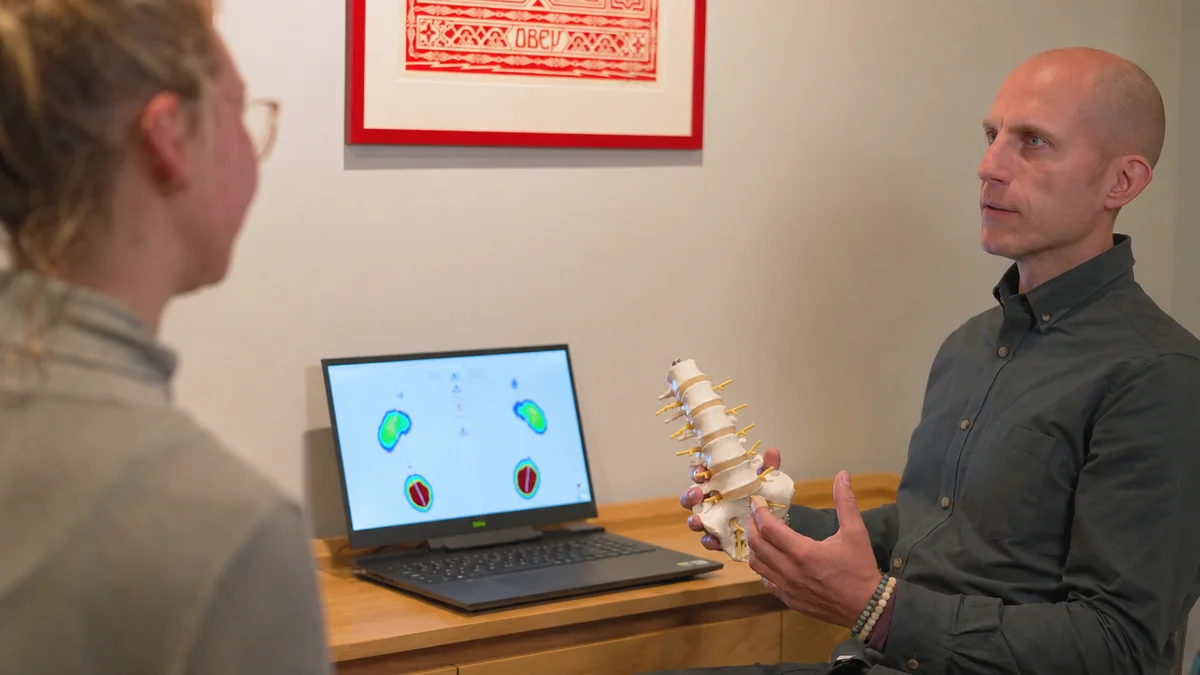
How We Do Gait Analysis
For many of us the uncertainty of not knowing what’s causing our pain is what prevents us from moving forward. A major part of our job is not only treating pain but identifying its underlying cause. If you suffer from unexplained or unsuccessfully treated foot pain, hip pain, knee pain or low back pain, the answer could be in your feet.
The gait analysis process involves a brief history, and then you will be asked to walk across a plate with 4000 sensors which are attached to a computer. The plate takes a very detailed moving image of what the feet do during your walking cycle. The entire gait analysis process takes around 30 minutes.

Read more about how we do gait analysis
Why We Do Gait Analysis
Gait analysis is a tool for those who are interested in long term prevention of pain. Gait analysis is a stepping stone to tailored forms of rehabilitation that target your specific issues. When the root cause of your pain has been uncovered it takes all the guess-work out of treatment and rehabilitation of your lower body pain.
We believe that all pains have a story to tell and that there are genuine underlying physical issues behind all stubborn pain, even the stress related kinds. The truth is, stubborn pains are preceded either by a significant injury or by deep and persistent patterns of weakness, misalignment, or scar tissue within the body. In other words, you don’t get sore overnight, and you certainly don’t get chronic pain overnight, unless you have had a major injury.
Read more about why we do gait analysis
Who Needs Gait Analysis
It is not always easy knowing where you should go to ask for help if you have a specific complaint. Obviously, not all practitioners are interested in all complaints. We pride ourselves on being transparent about the specific pain complaints that he have a strong track record of success with. There are a significant number of pain conditions that we can help you to manage, this is because we use a wide range of tools and approaches.
Back Pain
A percentage of all back pain cases are caused by movement and alignment problems in the feet and their connections to the knee and hip joints. On average we take over 3 million steps a year, and we do so mostly on unnaturally hard flat surfaces like paving concrete and tarmac. The jarring forces caused in our leg bones transfer directly through the pelvis into the delicate spinal tissues and can easily become a source of pain. Many of us get away with this form of stress in our lives without it turning into back pain because we have correct alignment through our lower bodies. Those of us with alignment and movement issues in our feet, knees, and hips are however susceptible to developing this kind of back pain.
Gait Analysis is an effective way of identifying whether your feet are causing your back pain. Knowing exactly what is happening when you walk in this way takes all the guess work out of creating longer term solutions to your back pain.
Hip Pain
Your hips do an incredible amount of work during your lifetime, they are the major hinges that connect your upper body to your lower body and they bear the weight off your entire upper body every time your heel strokes the ground. The hip is the most common joint in the human body to be replaced for good reason. Correct alignment through the hip during walking and running is absolutely essential for a lifetime of healthy pain free function of your hips. Gait Analysis can often reveal the underlying reasons for hip pain and even osteoarthritis to develop. Accurately identifying faulty movement patterns in the hip is an essential step if you wish to work towards consistently pain free hips in the long term.
Knee Pain
The fossil record shows that the human knee doubled in size very fast once we started walking upright, this should offer a glimpse of how much extra strain there is in a knee when you decide to walk upright. Correct and healthy function of the knee is intimately connected to movement and correct weight bearing of the feet.
If for example you have an arch that collapses when you walk this creates an awkward inward rotation of the knee with every step, an issue like this is more than enough to cause damage to the soft tissues of there knee over time. These kind of mechanical issues in the feet can even help predispose you to major knee injuries like ACL tears. Using Gait Analysis to identify weight bearing issues within the knee and foot connection is an excellent way to inform rehab decisions for knee pain sufferers.
Ankle Pain and Ankle Sprains
The ankle may be the joint that performs the biggest party trick of all weight-bearing joints. The ankle bears more weight than any other major joint, and yet it has less immediate muscle support than even a small non-weight-bearing joint. The secret to the ankle’s success is in its design, but it is a design that has its limits.
If you have alignment issues when you bear weight through your foot and ankle it weakens the soft tissues that hold the ankle together during all that work. In a percentage of us, this can predispose us to ankle pain and ankle sprains. Gait Analysis is a reliable way of identifying the underlying causes of ankle pain and the residual weaknesses left behind by many ankle sprains.
Foot Pain, Heel Pain, Arch Pain & Plantar Fasciitis
The soft tissues in the sole of the human foot spend their lives sandwiched between the heel bone and the hard flat surfaces that make up our urban environments. Being compressed like this with every footfall (over 3 million of them each year) means that pressure needs to be evenly distributed or damage cam occur to the connective tissues.
Gait analysis measures pressure and movement patterns and is considered alongside your history and examination.
IT Band Syndrome
The most common cause of IT Band Syndrome is repetitive strain. If your arch collapses when you take a step and bear weight it causes internal rotation of the hip and thigh. This kind of internal rotation of the hip and thigh puts stress through the IT Band and over time it reacts by tightening.
You can foam roll all you want but if you don’t identify and work on the underlying cause of your IT Band issues you’ll be rolling for a long time. The alignment of the foot and the strength of the glutes usually need to be addressed in order to make real progress with IT Band issues. Performing in depth Gait Analysis to identify exactly what is happening is the first step towards tailored solutions.
Shin Splints
People who suffer from shin splints generally either have major alignment issues or major muscle recruitment issues in the lower limbs. The kind of pain and pressure that come with shin splints doesn’t just show up out of the blue. Gait Analysis is an excellent way of digging into the possible underlying causes of shin splints with a view to putting preventative measures in place. Some might say this is a good thing to try out before you let someone cut a 6 inch hole in your shin in an attempt to reduce your pain.
Osteoarthritis
When it comes to explaining the connection between Gait Analysis and osteoarthritis in the hip and the knee we generally like to let logic and facts do the talking. More than 90% of all hip replacements are single replacements. This means that it is extremely common for 1 joint to wear out and the opposite hip joint to remain largely intact.
A gait scan records pressure and movement patterns. These measurements form part of an assessment; they do not establish the cause of osteoarthritis on their own.
Take A Tour Of Our Wellington Clinic
Our team offers a wide range of treatments, helping you to achieve your recovery goals.
 Watch our clinic introduction Opens a video popup · YouTube 4.9 · 400+ Google reviews
Proudly Partnered With







GET IN TOUCH
Let’s start your
pain relief journey.
We would be delighted to make you a booking
or answer any of your inquiries.