
Struggling with Physio or Chiro? Why You Should Try Sports Therapy Instead
Struggling with Physio or Chiro? Why You Should Try Sports Therapy in Wellington If you are dealing with chronic pain,
Conquering Outer Knee Pain: Advanced ITB Syndrome Treatment in Wellington
Wellington is a city of runners. From the flat, breezy stretches of the waterfront to the punishing inclines of the local trails, it is a brilliant place to build your fitness. However, increasing your running distance often brings an incredibly frustrating physical roadblock.
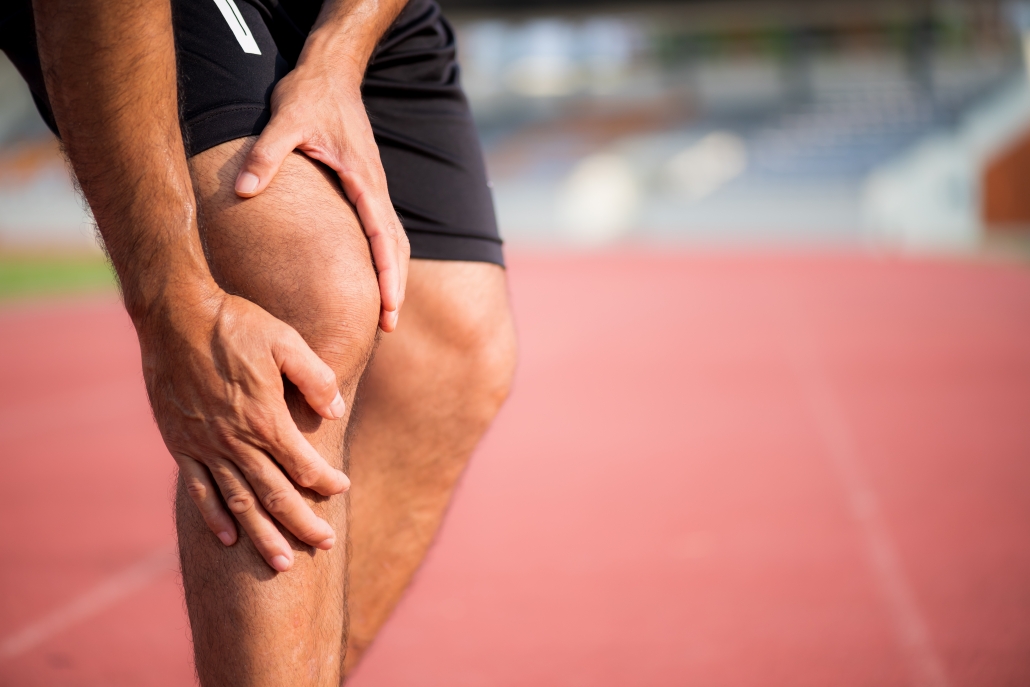
You might start your run feeling perfectly fine. Your breathing is steady, and your legs feel fresh. Then, roughly three or four kilometres in, a sharp, stabbing pain suddenly appears on the outside of your knee. It feels exactly like someone is driving a nail into the side of your joint. The pain becomes so intense that you are forced to stop running and limp home.
If this precise scenario has happened to you, you are almost certainly dealing with Iliotibial Band (ITB) Syndrome. It is one of the most common and persistent injuries we treat at Severn Pain & Injury Clinic. Getting rid of it requires a very specific, modern approach.
To fix the pain, you first need to understand the anatomy of your leg. Your Iliotibial Band, or ITB, is not a muscle. It is a massive, incredibly thick band of fibrous connective tissue. It starts at your hip, runs all the way down the outside of your thigh, and attaches to the outer side of your shin-bone just below your knee.
When your knee bends and straightens as you run, the lower section of this thick band naturally glides back and forth over the bony bump on the outside of your knee. If your running mechanics are slightly off, or if the muscles attached to the ITB become too tight, this gliding motion turns into harsh compression.
Consequently, the sensitive tissues sitting underneath the ITB become heavily compressed against the bone. Over thousands of repetitive strides, this compression creates severe inflammation. This deep, localised inflammation is exactly what causes that sharp, stabbing pain during your runs.
When runners develop ITB syndrome, their very first instinct is usually to grab a hard foam roller. They spend hours aggressively rolling up and down the side of their thigh, hoping to stretch the tight band out.
Unfortunately, this is often a massive waste of time. As mentioned earlier, the ITB is connective tissue, not muscle. It is structurally similar to a car seatbelt. In fact, clinical studies have shown that it takes an immense amount of mechanical force to stretch the ITB even a fraction of a millimetre.
Therefore, rolling directly on the ITB will not stretch it. Furthermore, if you aggressively foam roll over the outside of your knee where the pain is located, you will actively crush the already inflamed tissues. As a result, you will likely make the injury significantly worse.
To actually cure ITB syndrome, we have to look further up the leg. We must treat the muscles that are physically pulling the ITB entirely too tight.
At Severn Pain & Injury Clinic in Wellington, we look at the entire mechanical chain of your leg. The tension in your ITB is controlled by two specific muscles at your hip. These are the Tensor Fasciae Latae (TFL) and your gluteal muscles. When these muscles become exhausted and locked up, they pull the ITB tight like a guitar string.
We use modern sports therapy modalities to release this tension quickly and permanently.
Releasing Tension with Dry Needling Because the TFL and the deep glute muscles are very thick, standard massage often fails to release them. Firstly, we utilise Clinical Dry Needling. By inserting ultra-fine needles directly into the deep, exhausted trigger points within your hip muscles, we force them to completely relax. Consequently, this immediately releases the extreme tension pulling on your ITB.
Restoring Tissue Glide with Gua Sha While we cannot stretch the ITB, we absolutely can improve how it slides against your thigh. The fascia surrounding your leg muscles often becomes sticky, gluing the ITB down to the quadriceps beneath it. We use Gua Sha, a specialised instrument-assisted scraping technique, to gently release these superficial adhesions. This restores the smooth, frictionless glide of your tissues when you run.
Clearing Pain with HPL Therapy To address the severe, stabbing pain at the side of your knee, we use High Power Laser (HPL) Therapy. The targeted laser light penetrates deep into the inflamed tissues under the ITB. It heavily supercharges your cellular energy, flushing out the painful swelling in just a few short sessions. Therefore, it provides massive pain relief without the need for cortisone injections.
Repairing Damage with Shockwave Therapy If you have been battling ITB syndrome for many months, the chronic friction will have created stiff scar tissue. We use Extracorporeal Shockwave Therapy to shatter this old scar tissue using high-energy acoustic waves. In addition, shockwave therapy forces your body to grow fresh blood vessels in the knee, accelerating the final stages of your healing process.
Fixing the tissue is vital, but correcting why it happened is the ultimate cure. Once we have cleared the pain and released your hip muscles, we will assess your running mechanics. We will guide you through a targeted strengthening programme for your glutes and core to ensure your pelvis remains perfectly level while you run.
Do not let ITB syndrome keep you off the Wellington waterfront this season. Contact Severn Pain & Injury Clinic today, and let our expert team help you run strong, fast, and completely pain-free.
Struggling with Physio or Chiro? Why You Should Try Sports Therapy in Wellington If you are dealing with chronic pain,
Conquering Outer Knee Pain: Advanced ITB Syndrome Treatment in Wellington Wellington is a city of runners. From the flat, breezy
Hitting the Hills: The Most Common Running Injuries We See in Wellington Wellington is an incredible city for runners. On