SEVERN CLINICS PAIN · INJURY · RECOVERY
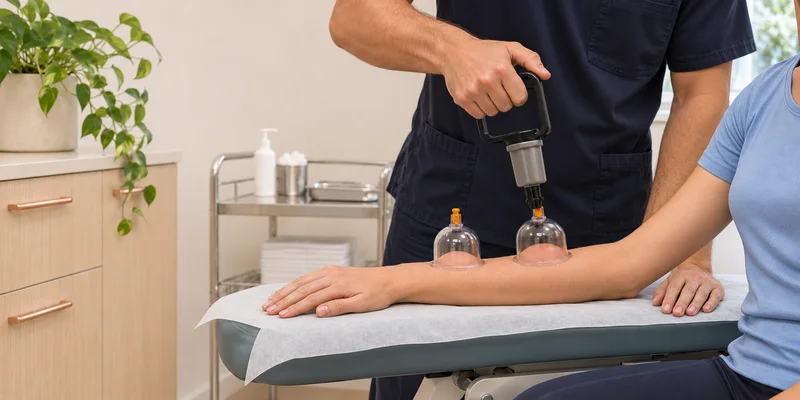
Illustrative clinical scene of controlled vacuum cupping on a supported forearm in a comfortable room with light oak furnishings.
Severn Clinics · Wellington CBD

Vacuum
Cupping

A modern, anatomy-led approach to cupping in Wellington.

At Severn, we apply controlled mechanical vacuum to the skin and underlying soft tissues as part of our approach to musculoskeletal pain.

Cupping has a long history, but our approach is grounded in a modern perspective on anatomy, musculoskeletal pain and the possible role of inflammation in pain and injury.

Google five-star rating 4.9 · 400+ Google reviews
A closer look at the treatment

Cupping at a Glance

Controlled vacuum suction

A handheld pump creates adjustable suction, allowing us to control the pulling force applied to the tissues.

Two techniques

We use stationary or moving cups, depending on the area and what our examination suggests about the pain.

Around 15 minutes

Cupping itself generally takes about 15 minutes and forms part of an appointment with other appropriate treatments.

A familiar tool, a modern perspective

An Old Technique
in a Modern Clinic

People are sometimes surprised that a clinic equipped with sophisticated treatment technology still uses cupping so regularly.

Alongside high-power lasers and shockwave equipment, a simple suction cup can seem rather old-fashioned.

But technological sophistication doesn't necessarily determine clinical value.

After years of working with different physical treatment methods, we've continued to find cupping worth including in our approach to pain.

It isn't something we keep around for tradition's sake, nor is it an occasional novelty.

It's one of the techniques we frequently consider when patients present with soft-tissue pain, and it remains a cornerstone of our clinical practice.

Simple tools.Considered clinical judgement.
The physical principle

What's the Intention
Behind Vacuum Cupping?

Changing pressure within the soft tissues

Most physical treatments apply pressure towards the body. Vacuum cupping works in the opposite direction.

By reducing the air pressure inside a cup, we create suction that draws the skin upwards and changes the mechanical forces acting on the superficial tissues.

That's the part we can observe directly.

Our clinical theory centres on changes in interstitial pressure and tissue tension, and the possibility that these may influence local circulation, fluid movement and inflammatory processes.

The intention is to influence the local tissue environment, then assess whether anything meaningful changes.

While we have our own theories about cupping, we don't claim that research has established its overall effectiveness in managing pain or confirmed its proposed mechanisms. Many studies are small or have methodological limitations, so firm conclusions remain difficult.

The Intention of Vacuum
Skin Superficial fascia Muscle LOWER PRESSURE
Skin
Superficial fascia
Muscle
Changes in interstitial pressure

Proposed effects of interstitial fluid and impact on inflammation have yet to be fully researched.

Looking beyond muscles and joints

Why Cupping Makes
Us Think About Fascia

Fascia is an extensive network of connective tissue that surrounds and connects muscles, nerves, blood vessels and other structures throughout the body.

It's not simply packaging. Fascial tissues contain sensory nerve endings and have become an increasingly interesting subject in pain research.

With cupping, the skin and superficial tissues are pulled upwards rather than pressed downwards. This changes the mechanical loading of the connective tissue beneath the cup.

That makes fascia particularly interesting to us. We consider the movement, sensitivity and anatomical location of these tissues during examination, while recognising that their exact contribution to an individual's pain can be difficult to establish.

Illustrative connective-tissue network · anatomical study
Clinical selection

When Do We
Use Cupping?

We consider cupping when we suspect that superficial fascial tension, tissue sensitivity or local inflammatory activity may be contributing to someone's pain.

The difficulty is that these things aren't always easy to identify.

There's no simple blood test or routine scan that can tell us whether a particular area of fascia is restricted and responsible for someone's symptoms.

This means clinical judgement is important. We use anatomical knowledge, palpation and the patient's symptoms to decide whether cupping may be worth considering.

The area itself matters, too. Broad surfaces with sufficient soft tissue are generally easier to cup than regions with prominent bones, thin tissues or irregular contours.

At Severn, we use cupping in combination with other appropriate treatments rather than as an isolated intervention.

Ask us about cupping →
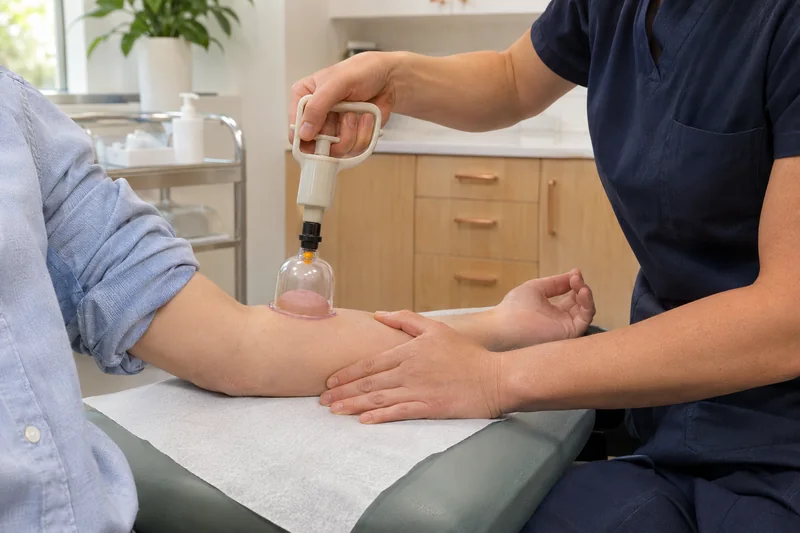
Illustrative clinical scene of a manual suction pump applied to a transparent cup on a patient’s supported forearm.
Mechanical suction, applied using a handheld pump · illustrative photograph
Two techniques

Two Ways We Use Cupping

The same vacuum principle, applied differently

01 / Stationary cupping

Stationary Cupping

We position a cup against the skin and use a handheld mechanical pump to create suction.

The cup remains in place for a selected period, maintaining a pulling force on the tissues beneath it.

This is the method we use most frequently.

02 / Moving cupping

Moving Cupping

Sometimes we move a cup across the skin while maintaining suction.

This changes the direction and distribution of mechanical forces as the cup travels over the treatment area.

We use moving cups more selectively, depending on the anatomy and the intended application.

What to expect

What Happens During
a Cupping Appointment?

01

Examining the area

We discuss your symptoms and examine the relevant tissues, paying attention to tenderness, anatomy and possible treatment locations.

02

Getting comfortable

You'll usually lie on the treatment table, although some areas can be treated while sitting. We position the cups against the skin and explain what to expect.

03

Applying the vacuum

A handheld pump creates suction within each cup. We adjust the intensity according to the area and your comfort. Most treatments involve stationary cups, generally left in place for around 15 minutes.

04

Reviewing the response

We release the suction, remove the cups and reassess your symptoms and movement. Cupping is usually one component of a longer appointment involving other treatment methods.

Inside the treatment room

What Does Cupping Feel Like?

Cupping produces a distinctive pulling sensation. Initially, the suction can feel surprisingly strong, sometimes accompanied by pressure or discomfort.

Interestingly, we often find that the sensation becomes easier to tolerate as the session progresses. Many people describe the later stages as relaxing, and some find them extremely relaxing.

We monitor your comfort and adjust the suction rather than expecting you to tolerate excessive intensity.

Around 15 minutesTypical cupping application
Adjustable suctionGuided by your comfort
A detail that surprises people

The Surprising Truth
About Cupping Marks

Those famous circles don't tell the whole story

The dark circular marks associated with cupping have become its most recognisable feature. It's natural to assume that every treatment leaves them behind.

But in our clinical experience, the majority of cups leave little or no lasting mark at all.

Sometimes darker circles do appear, and we often notice them around areas where patients are experiencing pain.

There's considerable variation between people, between treatment areas and even between cups used during the same appointment.

When marks occur, they may remain visible for several days before fading. We explain this possibility before treatment so you know what to expect.

Why every cup doesn't look the sameIllustrative skin appearances · individual responses vary
Little or no mark Temporary redness A darker circle
Little or no mark
Temporary redness
A darker circle
Reviewing treatment

How Do We
Judge the Response?

We look for an answer early.

One of the things we particularly value about cupping is that, in our clinical experience, patients who respond often show some change relatively quickly.

We reassess pain, tenderness and movement after treatment.

We also want to know what happens over the following days. Did anything change? How much? And how long did it last?

Like every healthcare intervention, cupping doesn't work for everybody.

If there's no worthwhile response, we'd rather recognise that early and consider other treatment options than continue with an approach that doesn't appear to be helping.

Our clinical experience helps us decide when cupping is worth considering. Your individual response helps us decide what to do next.

What guides the next decision?
We pay attention to
what changes.
01
PainIs there a worthwhile change in the pain that brought you in?
02
Tenderness & movementDoes the area feel or move differently?
03
Over the next few daysHow long did any difference last?

If cupping isn't providing a meaningful response, we reconsider the plan rather than repeating it by default.

Come and look around

Take a Look
Around Severn

See our Wellington clinic and treatment rooms before your first appointment.

Watch Our Clinic Introduction →
Still from the Severn Clinics introduction video.

The People Behind Severn

Tobias Hall seated at Severn Clinics

Tobias Hall

DC · BSc (Hons) · Sports Therapy

Clinic Director

20+ years’ experience

Useful to know

Questions About Vacuum Cupping

Does cupping hurt?

The initial pulling sensation can be strong or uncomfortable. We adjust the suction to your tolerance, and many people find it becomes more comfortable as the session progresses.

Will cupping leave marks?

Not necessarily. In our clinical experience, most cups leave little or no lasting mark, although temporary circular marks are possible.

Do you use fire?

No. We use a handheld mechanical pump to create and control the suction.

Is cupping suitable for everyone?

No. Some skin conditions, bleeding risks, medications and other clinical considerations can make cupping inappropriate. We check suitability before proceeding.

Do you use cupping on its own?

At Severn, cupping generally forms part of an appointment that includes other appropriate treatment techniques.

Do I need to book cupping specifically?

No. Tell us about your symptoms or interest in cupping, and we'll help you arrange an appropriate appointment.

Watch Our Clinic Introduction

Watch on YouTube